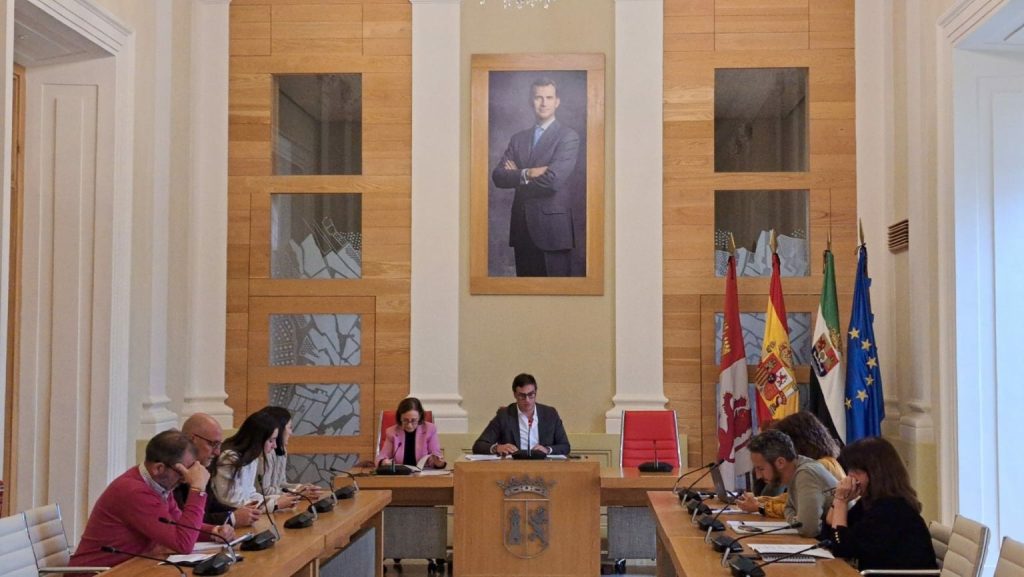
The Committee for Culture, Education, Festivities and Trade has approved the framework document of the new Cultural Strategy of the city for the period 2026-2036.
As explained by the Councilor for Culture, Jorge Suarez, this is a plan that seeks to position Caceres as a cultural reference recognized nationally, European and internationally and that comes to reinforce and complement the project of Caceres European Capital of Culture 2031.
The proposal has received the support of the PP municipal group, the abstention of VOX and Unidas Podemos, and the vote against of the PSOE.
The document establishes the vision of consolidating culture as an engine for the transformation of the city, combining heritage and contemporaneity, nature and city, tradition and innovation. Its mission is to strengthen the cultural identity of Cáceres and its surroundings, promoting creativity as a tool for social and economic development, and reinforcing connections with European and international networks.
According to Suárez, the Cultural Strategy is articulated in five main axes:
- Cáceres as a center for the production and dissemination of culture: with actions to promote historical, artistic and museum heritage, as well as cultural programs and festivals that attract national and international visitors.
- Qualification of the cultural and creative ecosystem: promoting the professionalization of artists and cultural agents, the development of collaborative networks and training in management and digital skills.
- Diversified, innovative and inclusive cultural offer: including educational projects, cultural mediation in neighborhoods, universal access to culture and inclusive activities for different groups.
- Heritage management and safeguarding: through sustainable conservation models, digitization and collaboration with the Consortium of World Heritage Cities.
- Planning, monitoring and international projection: to measure the social and economic impact of cultural activity and strengthen the participation of Caceres in European and cross-border networks.
“With the approval of this strategy, the City Council of Cáceres continues to take firm steps to further consolidate culture in the city as a central element of social and economic development; and at the same time, to promote quality events and activities that are attractive at all levels, from local to international, as expected of a World Heritage City,” concluded the councilman.