- Guardiola highlights the co-presidency of the European Committee of the Regions, headed by Kata Tütto and Juanma Moreno for the 2025-2030 term, as an example of plurality, understanding and good governance within the EU
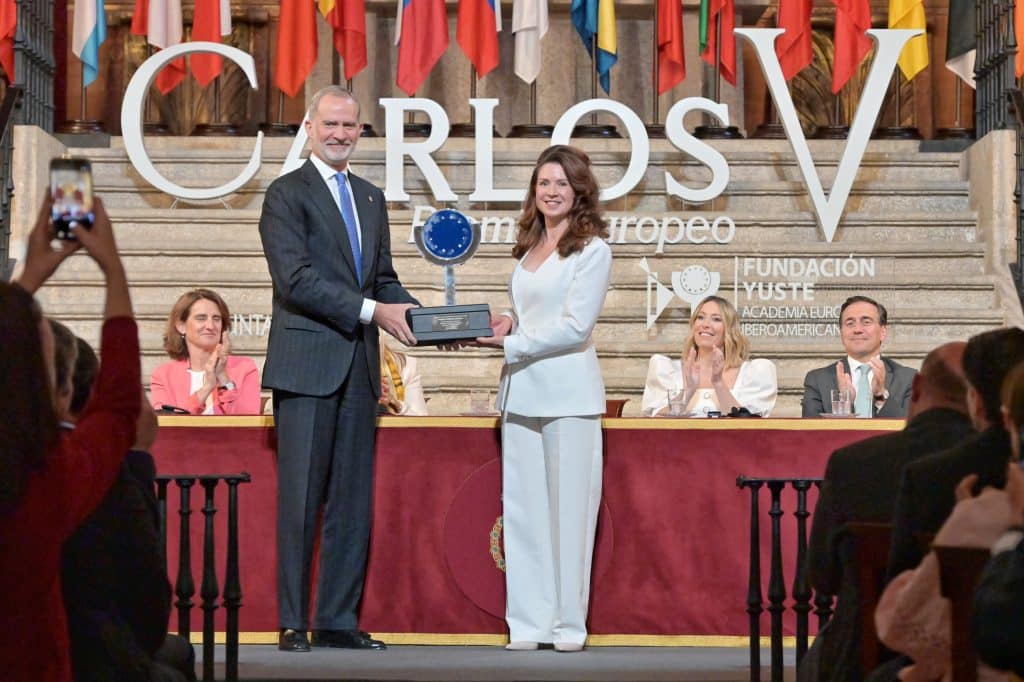
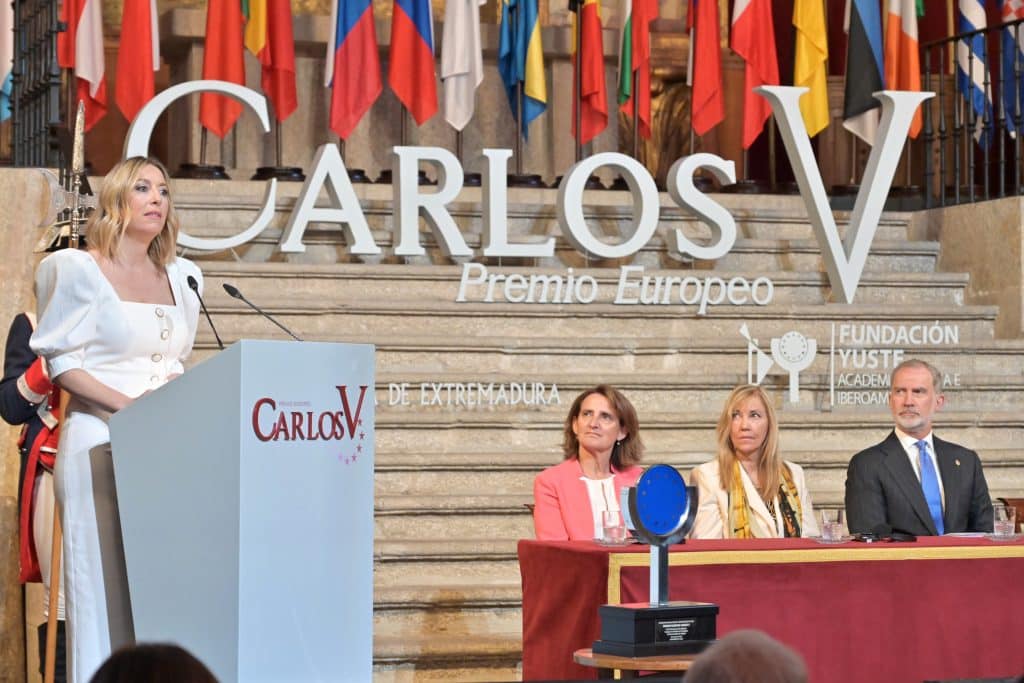
The president of the Regional Government of Extremadura, María Guardiola, emphasized on Monday the essential role of regions and municipalities in building the European project during the Carlos V European Prize ceremony, held at the Monastery of Yuste, which this year was awarded to the European Committee of the Regions (CoR).
During her speech, the president of Extremadura argued that Europe “is built on courage and on the word” and emphasized that local governments represent the foundation upon which the European Union rests. “The idea of Europe reminds us of that child holding a balloon, preventing it from drifting away and being lost in the sky. That hand tightening the string, that seemingly tiny but constant force, represents the municipalities and regions,” she stated.
The head of the regional government highlighted the work carried out by the European Committee of the Regions as the institution responsible for conveying the voice of the territories to the heart of the community institutions and assured that its work demonstrates that “cities and regions are not on the periphery of the European project, but a decisive part of its strength.”
In this regard, she advocated for a “humane, compassionate, and approachable” Europe, built “from the bottom up,” through cooperation between states, regions, and municipalities. “Only in this way can we face the challenges ahead,” she stated.
Institutions, a guarantee of democratic coexistence
The president insisted that the European Committee of the Regions represents “the Europe that listens,” one that understands that “no decision is fair if it forgets those who experience it firsthand,” and that institutional legitimacy “is based on usefulness and the ability to respond to the real needs of citizens.”
She also warned about the current international context marked by war, economic uncertainty, and growing political and social polarization. In response, she called for “respect for institutions” and reaffirmed their value as a guarantee of rights, freedoms, and democratic coexistence.
“Institutions do not belong to any government, party, or generation. They belong to the citizens, to their past and their future,” she stated, adding that when institutions “weaken or lose prestige, the whole of society loses.”
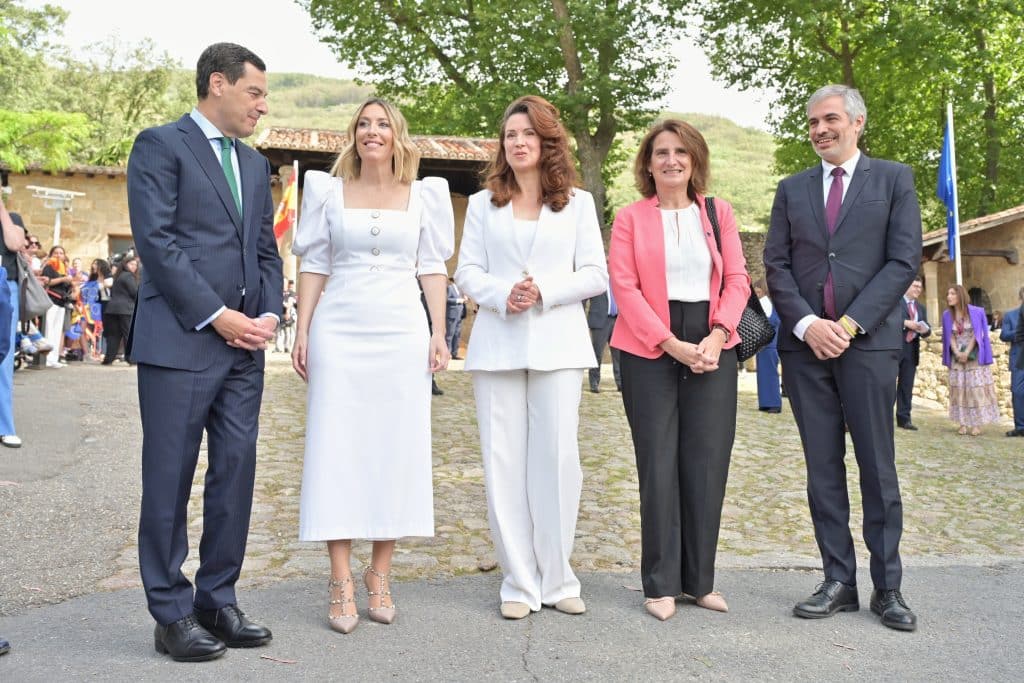
The president of Extremadura also highlighted the co-presidency of the European Committee of the Regions, headed by Kata Tütt and Juanma Moreno, as an example of plurality, understanding and good governance within the European Union.
Regarding Kata Tütt, the president highlighted her commitment to urban sustainability, public services and social cohesion, while she praised Juanma Moreno’s “moderation, serenity and agreement” as a way of exercising Europeanism from an institutional responsibility.
During her speech, the president also highlighted the role of Extremadura within that Europe of regions and municipalities, recalling that the autonomous community is well aware of the importance of demanding “fair funding, decent infrastructure, efficient connectivity and the right to grow and contribute”.
“We believe in this Europe of regions and municipalities because in it we are all great and all citizens are identical in dignity and rights,” she said.
The president also expressed her gratitude for the presence of His Majesty King Felipe VI at the event and the Crown’s support for the Carlos V European Prize, an award she described as part of the “emotional heritage of Extremadura and all of Spain.”
The event, held at the Monastery of Yuste, also served to reaffirm the value of the European project at a time of profound international challenges. In the final part of her speech, the president appealed to collective confidence in Europe and its capacity to overcome current difficulties.
“Europe succeeded because it believed in itself. And it will be able to face its new challenges if we continue to believe in it and build it from each region, from each town,” she concluded.