- The announcement was made today after a week in which the nine shortlisted cities presented their bids before a committee of experts
- Spain and Malta are the two countries that will host the European Capitals of Culture in 2031
- Since the European Commission launched this initiative in 1985, more than 80 European cities have been awarded this recognition, including Madrid (1992), Santiago de Compostela (2000), Salamanca (2002), and San Sebastián (2016)
Cáceres, Granada, Las Palmas de Gran Canaria, and Oviedo are the finalist cities to become European Capital of Culture in 2031, the year in which Spain and Malta will host the European Capital of Culture.
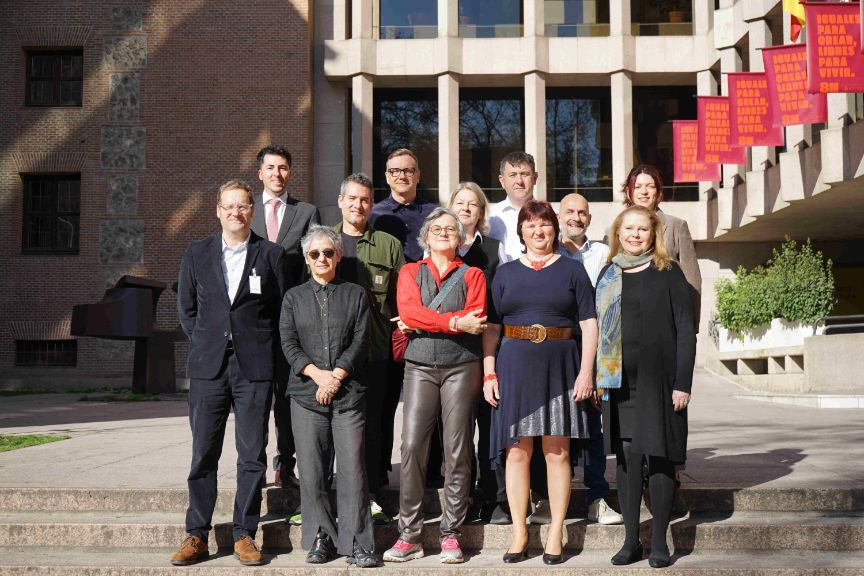
This was announced today by Tanja Mlaker, Chair of the Expert Committee, Nikos Isaris, Deputy Director of the European Commission Representation in Spain, and Carmen Páez, Undersecretary of the Ministry of Culture, at a press conference held at the Ministry’s headquarters.
The announcement came after the nine shortlisted cities (Burgos, Cáceres, Granada, Jerez de la Frontera, Las Palmas de Gran Canaria, Oviedo, Palma, Potries, and Toledo) presented their bid programs to host the European Capital before the Expert Committee responsible for the selection throughout this week.
Tanja Mlaker, on behalf of the Expert Committee, congratulated all candidate cities for their work, stating that “you have taken us on a unique journey through your cities and regions, showing us the richness and variety of Spanish cultures. It has been a great privilege to learn about your dreams and ambitions, the characteristics of your cities and regions, the challenges and connections you already have and are developing with other cities and regions in Europe.”
This independent Committee is composed of ten people, eight of them appointed by the European institutions involved in the European Capital of Culture and the other two by the Ministry of Culture. They are Anthony Attard from Malta, Csaba Borboly from Romania, Roberta Ferrarini from Italy, Suvi Innilä from Finland, Erni Kask from Estonia, Tanja Mlaker from Slovenia, Matthias Ripp from Germany, Małgorzata Szabłowska from Poland, and the Spanish members Teresa Badia Dalmases and Pablo Berástegui Lozano.
Next Steps The final phase of this selection process, in which the chosen city will be announced, will take place next December. For that final selection, Cáceres, Granada, Las Palmas de Gran Canaria, and Oviedo must complete and revise their bid dossiers, based on the cultural program already presented and taking into account the recommendations indicated by the Expert Committee in the reports they will issue within one month on each of the projects.
At the end of this year, the finalist cities will be received again by the Committee to present their project. It will be then when the Expert Committee will announce the city that will host the Capital of Culture.
The Spanish European Capital of Culture 2031 will host a cultural program throughout the entire year of its tenure, which will include activities with local and European artists and international cooperation programs.
European Capital of Culture
The European Capital of Culture is an annual title awarded by the European Union to a city to highlight European cultural diversity, promote intercultural dialogue, and stimulate long-term cultural, social, and economic development.
This initiative was born as a process of continuous reflection that contributes to valuing the richness, diversity, and common characteristics of European cultures. Since the European Commission launched this initiative in 1985, more than 80 European cities have been awarded this recognition, including Madrid (1992), Santiago de Compostela (2000), Salamanca (2002), and San Sebastián (2016).
The process to become a Cultural Capital begins six years in advance. The formal designation takes place four years before the year in which the title is awarded.