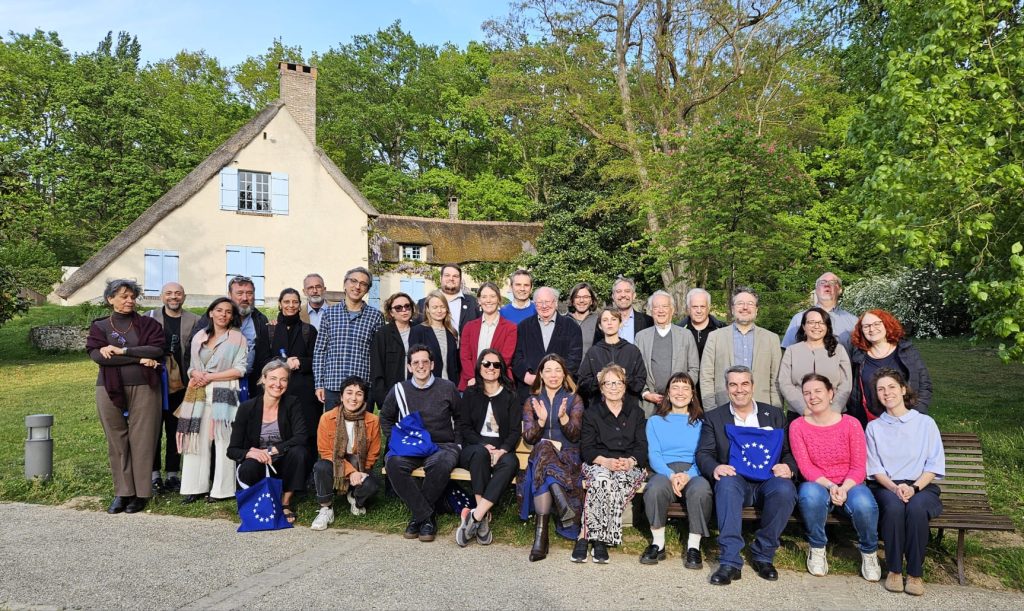
*By Iris Jugo, coordinadora general de Cáceres 2031.The Jean Monnet House, France. April 2026*
Europe was, above all, a promise of peace for all. Today, that promise must be renewed and lived in every townand city, showing that Europe belongs to those who feel part of it, far beyond Brussels.
After a devastating war that left Europe and the wider world breathless, a group of men and women chose unity over division. They nurtured the seed of what we now know as the European project.
The origins of this project lie in the aftermath of the Second World War (1939–1945), a conflict that claimed more than 60 million lives and left the continent deeply fractured. In this context, the need emerged to secure lasting peace in Europe through cooperation. One of the key architects of this vision was Jean Monnet (1888–1979), widely regarded asone of the founding fathers of the European Union. From a pragmatic standpoint, he argued that peace could not rest solely on political agreements, but had to be built on economic interdependence between nations.
This vision took shape in the Schuman Declaration of 9 May 1950, which proposed placing the coal and steel production of France and Germany under a common authority. As a result, the Treaty of Paris was signed in 1951, establishing the European Coal and Steel Community (ECSC), initially composed of six countries: France, West Germany, Italy, Belgium, the Netherlands and Luxembourg. A few years later, in 1957, the Treaties of Rome further expanded this cooperation with the creation of the European Economic Community.
Built on these principles, and around what would later become its motto, “United in diversity”, a project began to take shape arguably the most significant peace project of our time.
Today, this idea of a united Europe, rooted in belonging, is under strain. It is now essential that those who were not always seen as central to the European project (municipalities, artists, festivals and foundations) take a leading role in strengthening it.
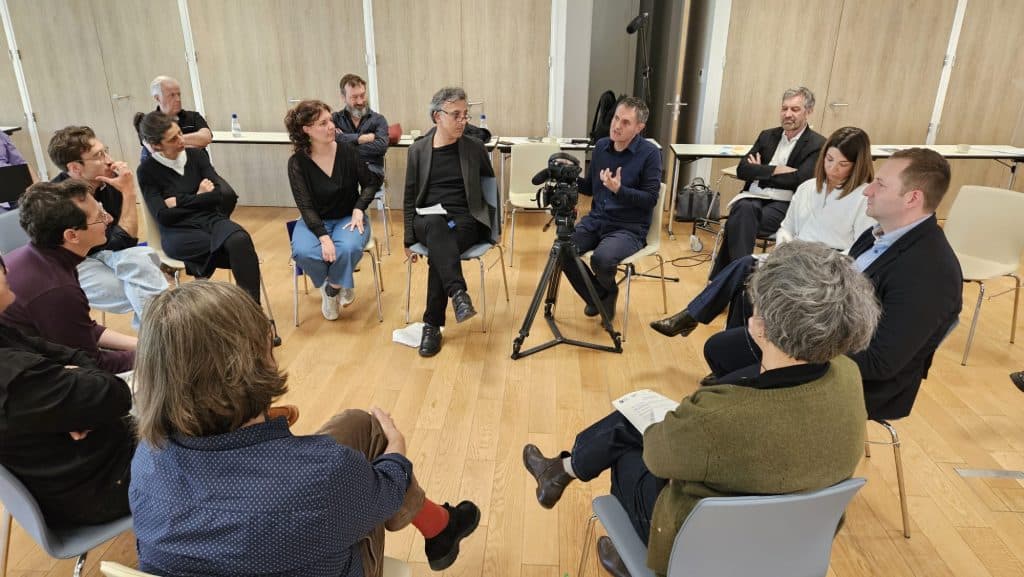
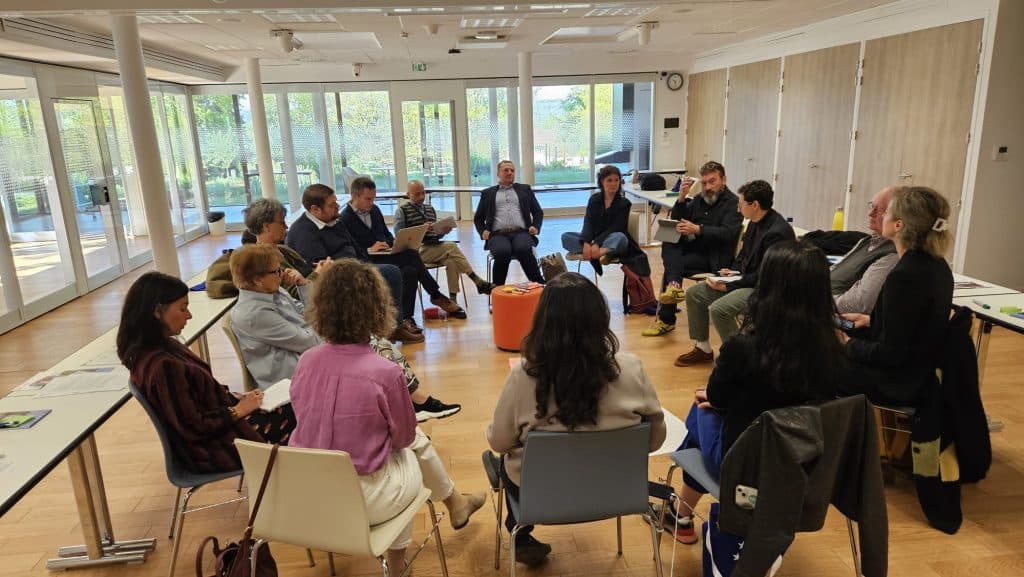
The work taking place here over these days, at the Jean Monnet House, a site of memory that forms part of the European Parliament, and where, one might say, it all began, is about contributing from other levels, closer to citizens, to ensure that what has been built with such effort is not lost. This initiative is the result of cooperation between civil society organisations from across Europe, including the Jean Monnet Association, A Soul for Europe, the European Festivals Association, the Yuste Foundation and Stiftung Zukunft Berlin, all committed to strengthening a sense of belonging from the local to the European level.
Populism, nearby conflicts, confrontation, messages of hate, and the re-emergence of borders and walls all threaten the European project, a project rooted in peace, respect and belonging to a shared space shaped by diverse, yet fundamentally humanist, values.
We are searching. We are debating. We are trying to understand how such a vast idea can truly reach citizens.
From our associations, our municipalities, our local governments and our rural communities, we call for effective ways forward for support, for resources and for training that go beyond good intentions, established practices and spaces for dialogue.
The goal is simple: that every citizen (diverse, peripheral, rural) feels included once again, and recognises this as their project. A project of peace and progress: the European Union.
In this context, Cáceres 2031 continues on its path: protecting, creating spaces for encounters, and welcoming local and European artists in Cáceres and across Extremadura. From there, it contributes to this European dialogue. We take on our role with responsibility.
We are grateful that this journey, and our position as finalists for the European Capital of Culture 2031, has brought us to places like this. We believe that, through ideas and commitment, this project will take root across Europe through the arts, culture, research, networks, festivals and citizens who understand peace as a vital necessity.
A necessity like water for life. Like birdsong in the morning. Like the continuity and care of the legacy we have inherited.
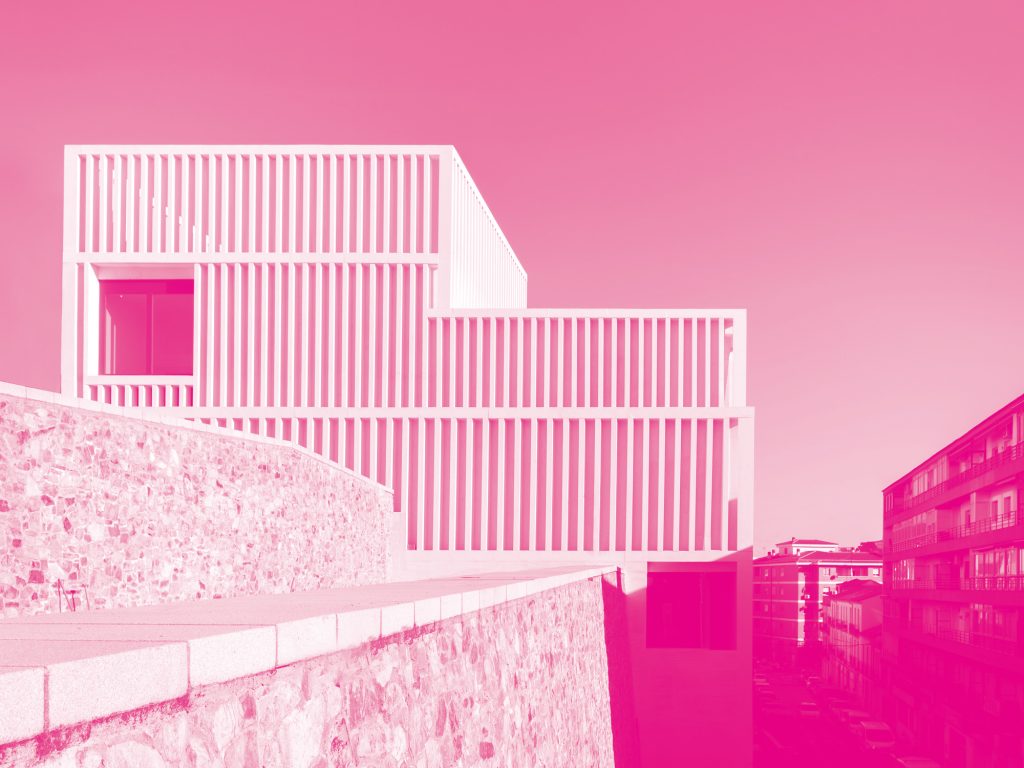
The legacy of Cáceres can be seen in every stone, every square, every aspiration to grow as a city and as a region. It comes alive through embracing Europe and amplifying the voices of those who have not always felt heard.
We would like to close by expressing our sincere thanks to the Yuste Foundation, which, from Extremadura, creates these spaces for encounter and dialogue, channeling the hopes and aspirations of those working to rebuild and revitalise the European project.
We trust that the effects of these encounters and dialogues will reach everyday citizens.
The motto of our candidacy, Transcultura, embodies this: transcending borders, recovering ancestral knowledge,bringing forward new perspectives, including the most vulnerable, and making culture in Europe a tool for peace, co-creation and participation.