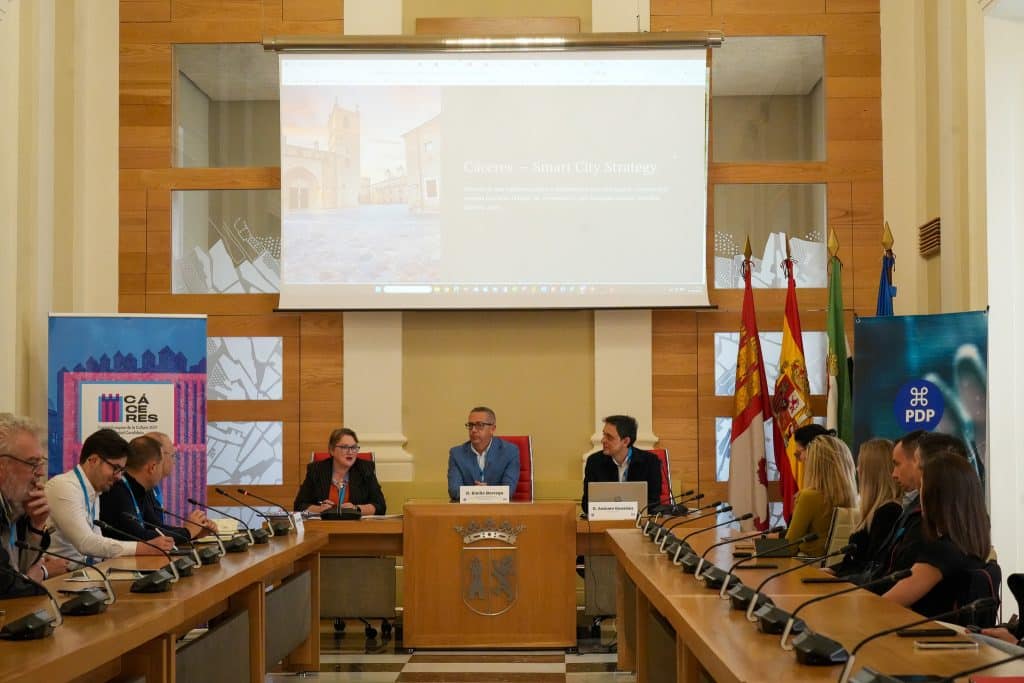
- Eight public entities from the Northeast region of Romania officially support Cáceres’ candidacy for European Capital of Culture
- They represent more than 700,000 inhabitants and are part of a broad European cooperation network
Cáceres’ bid to become European Capital of Culture 2031 continues to consolidate its international and European dimension through new strategic alliances with Eastern Europe, one of the lines of work recommended by the panel of European experts in their evaluation report of the candidate cities.
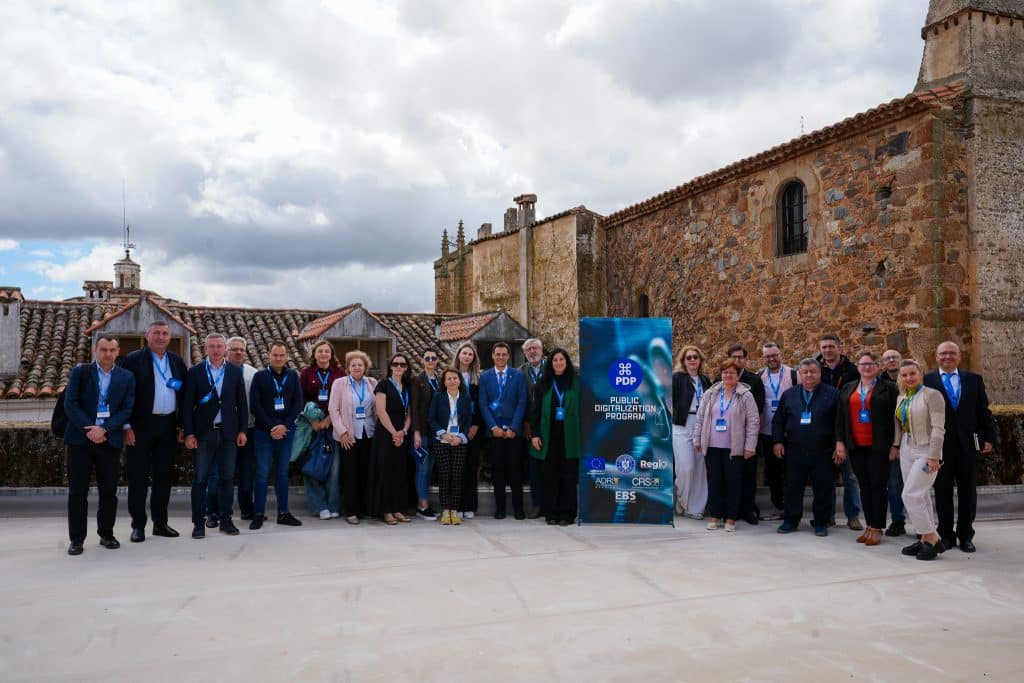
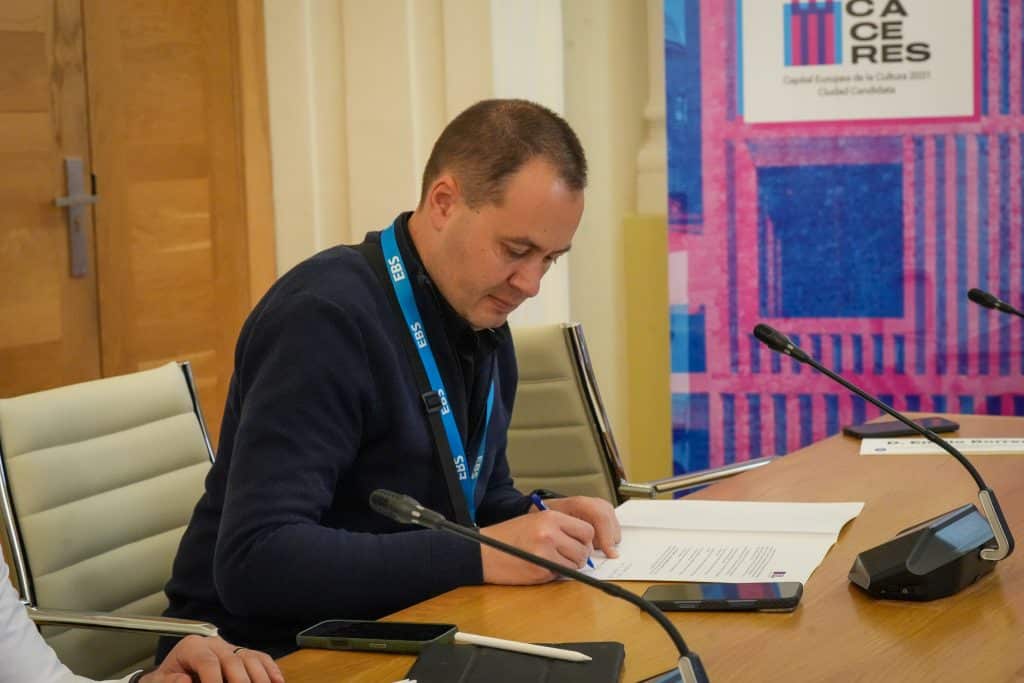
In this context, eight public institutions in the Northeast region of Romania have officially expressed their support for Cáceres 2031 within the framework of the Public Digitalization Program (PDP), promoted by the EBS Foundation and the University of Extremadura (UEx). The participating entities collectively represent more than 700,000 inhabitants and are part of a broad European network linked to public innovation, digital transformation, and territorial development.
Ties with Eastern Europe
Among the signatory institutions are the Northeast Romania Regional Development Agency (Agenția pentru Dezvoltare Regională Nord-Est), the Municipality of Iași, the Municipality of Botoșani, the Botoșani County Council, as well as the municipalities and communes of Hârlău, Pașcani, Siretel, Tamasi and Victoria.
The membership took place during the official reception offered by the mayor of Cáceres, Rafael Mateos, to the Romanian delegation participating in the program.
This new alliance also takes on special symbolic value within the philosophy of “Transculture” and “Cultural Transhumance,” central concepts of Cáceres’s candidacy. Both Extremadura and various Romanian regions historically share traditions linked to transhumance and the seasonal movement of pastoral communities, a common cultural heritage that today inspires new forms of cooperation between European territories.
Cáceres 2031 understands culture as a tool for connecting regions, identities and communities, especially those peripheral and rural territories seeking to build a more cohesive, sustainable and collaborative Europe.
The program director and professor at the University of Extremadura, Carlos Ongallo, highlighted that “this support reflects the European and international dimension that Cáceres is achieving thanks to cooperation, training and innovation projects promoted from Extremadura.”
With this new network of support, Cáceres 2031 continues to strengthen its European positioning through knowledge exchange, institutional cooperation and the creation of lasting cultural links with other territories on the continent.