- Mayor Rafa Mateos invites municipalities to display the European Capital of Culture bid flag in prominent public spaces and illuminate their town halls in the colours of the candidacy on 4th September
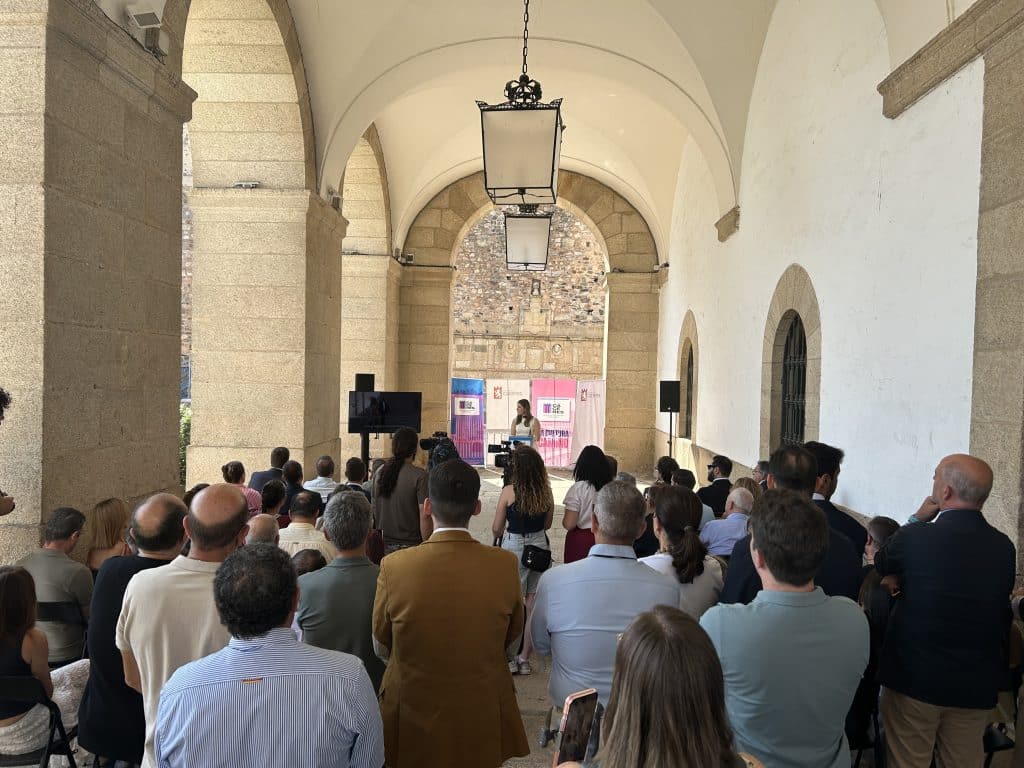
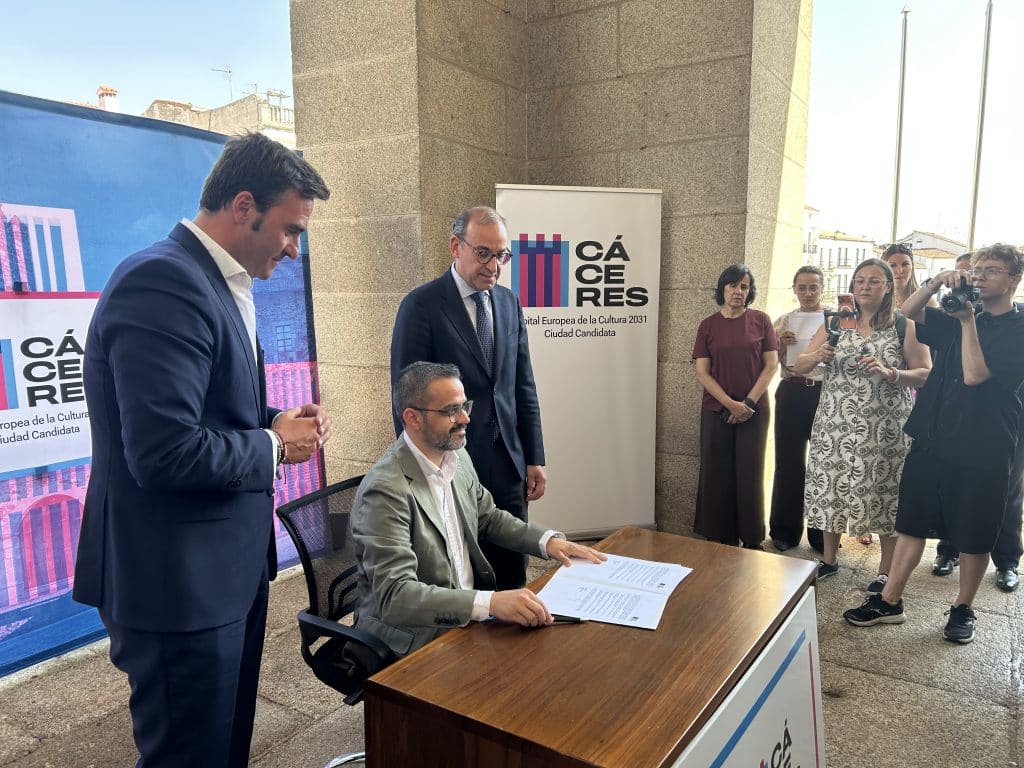
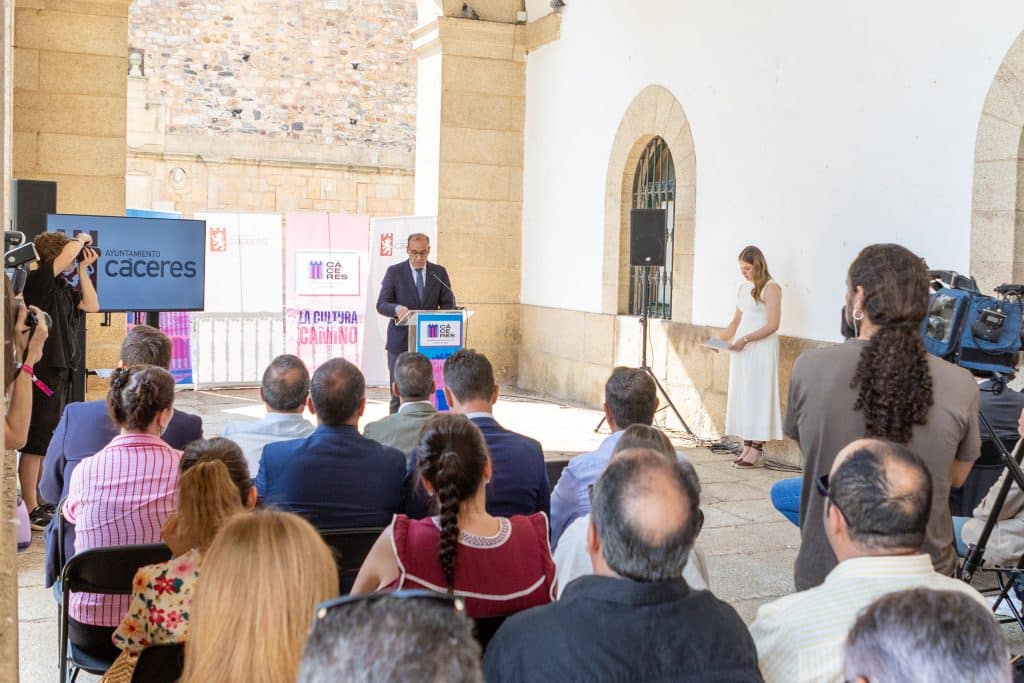
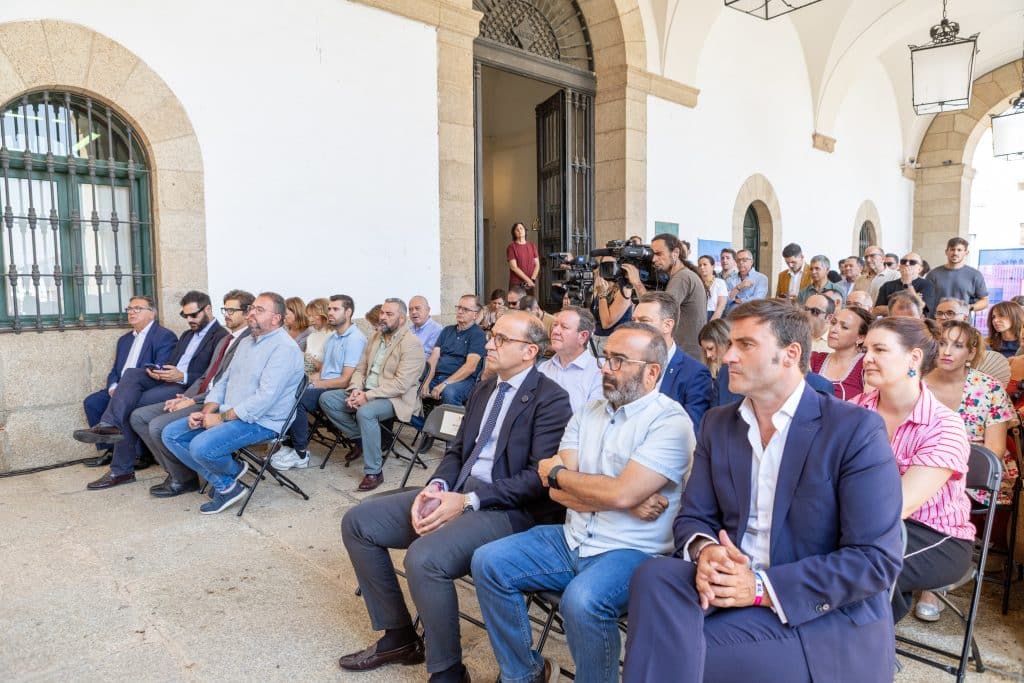
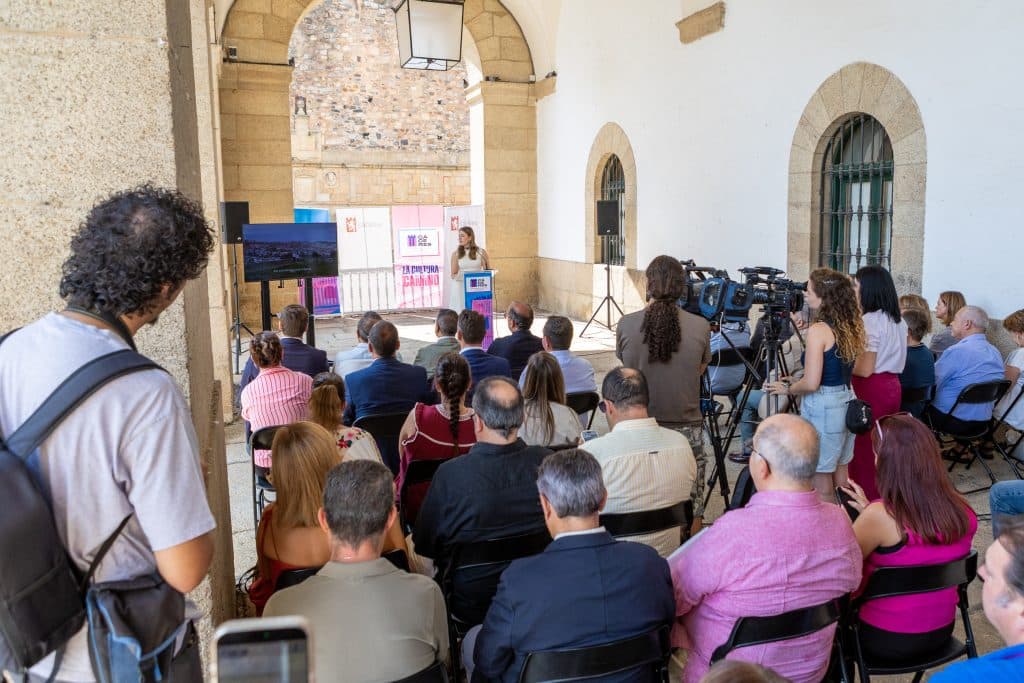
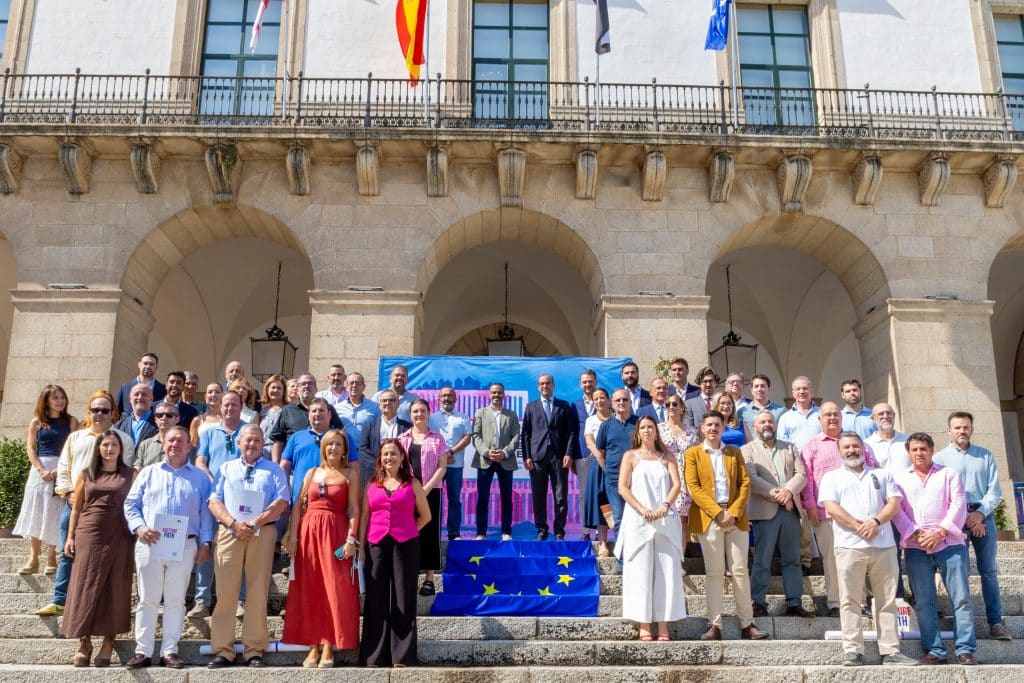
More than fifty municipalities from across Extremadura, led by Manuel José González Andrade, President of the Federation of Municipalities and Provinces of Extremadura (FEMPEX), gathered today at Cáceres City Hall to publicly demonstrate their unanimous support for Cáceres’ bid to become European Capital of Culture 2031.
The event brought together the President of the Provincial Council of Cáceres, together with mayors, councillors and local representatives from Badajoz, Mérida, Almendralejo, Navalmoral de la Mata, Plasencia, Zafra, Coria and many other municipalities from across the region.
Mayor Rafa Mateos thanked all the local representatives for their commitment.
“Thank you all for joining us today. I know how demanding our schedules are, and I truly appreciate the effort many of you have made to travel to Cáceres, some after several hours on the road. I also know that many others would have liked to be here but were unable to attend due to prior commitments.”
“In any case, thank you for this overwhelming, generous and forward-looking show of support that Cáceres’ candidacy is receiving today from every corner of Extremadura,” Mateos added.
The Mayor also stressed that “today we are once again showing Europe that this is a project capable of bringing us together, inspiring us, strengthening us and helping us grow collectively. There are colours that unite us all: the green, white and black of the Extremadura flag, alongside the blue, magenta and white of Cáceres’ European Capital of Culture 2031 bid.”
Institutional support through FEMPEX
Mateos explained that “when, as Mayor of Cáceres, I proposed that FEMPEX formally join the bid, its President accepted immediately. He understood that this signature represents far more than a formal endorsement: it symbolises the support of all 388 municipalities in Extremadura, from the largest cities to the smallest villages, all sharing the same determination to contribute to this common project.”
Referring to the current evaluation process, the Mayor recalled that “Cáceres has already reached the final stage of the European Capital of Culture competition. This is the furthest our city has ever progressed in such a bid, and that alone is something we should all be proud of.”
“The panel of European experts recognised that our Bid Book presents a sincere and authentic proposal, deeply rooted in our territory. It was prepared by an outstanding technical team that supported us professionally during our presentation at the Ministry of Culture and is now refining the dossier, incorporating the panel’s recommendations as well as powerful new images such as the one we are creating together today.”
He added that “we do not need to invent anything. We simply need to demonstrate that the concept of ‘Transculture’ is already a reality throughout our municipalities, and that culture genuinely transforms communities, enriches society and strengthens our towns and villages.”
A historic regional alliance in support of Cáceres 2031
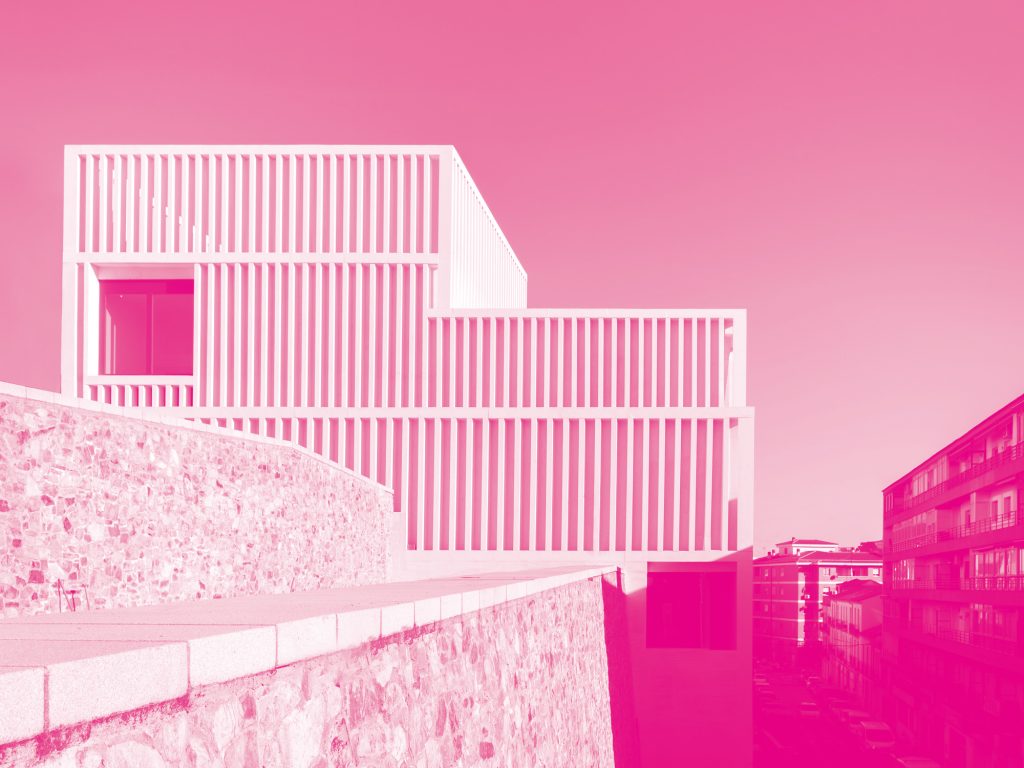
The Mayor underlined that “Cáceres, which this year marks the 40th anniversary of its designation as a UNESCO World Heritage City, cannot be understood without its roots and defining cultural landmarks, such as WOMAD, the Biennial of Graphic Arts, the iconic cistern of the Cáceres Museum, the Irish Fleadh Festival or its magnificent city walls, which are currently undergoing careful restoration.”
“Nor can it be understood without the innovative spirit of the Helga de Alvear Museum, the excellence of Atrio, the future arrival of the Iberian Network of Foundations through Fundación MAPFRE at San Jorge, or the future Madruelo Museum, which will house Europe’s most important collection of ceramics and musical instruments.”
Mateos also emphasised that “Cáceres would not be what it is without drawing inspiration from the Mérida International Classical Theatre Festival, the cultural life surrounding the Alcazaba of Badajoz, the Alcántara Classical Theatre Festival, the extraordinary heritage of Yuste, or the rich cultural traditions of Montánchez, to mention just a few examples, as well as the shared identity of La Raya, our borderland with Portugal, which brings us closer rather than dividing us.”
Finally, the Mayor invited all municipalities to take part in two symbolic initiatives to give visibility to the candidacy.
“We will provide each municipality with a flag and a banner featuring the image of the bid, and we invite you to display it from today onwards in a prominent location and to share it through your social media channels so that together we can multiply its impact. We also invite you to illuminate your town hall façades in pink and blue on 4 September.”
“Europe wants to know what Extremadura can contribute to culture. I believe we have compelling arguments and that we are presenting them in the right way. But I also know that, if we succeed, everyone will benefit. Beyond the significant economic investment that the title would bring, we are already witnessing how valuable this journey is, and how culture must continue to be our path forward.”
For his part, FEMPEX President Manuel José González highlighted that “this is a collective project which should also serve as an example for future regional initiatives. It coincides with the 40th anniversary of Spain’s accession to the European Union—forty years of progress and opportunity for our region thanks to Europe. That is why we must look towards Europe with confidence, determination and hope that, ultimately, it will choose Cáceres as European Capital of Culture 2031.”