- The general coordinator of Cáceres 2031, Iris Jugo, participates in the Berlin Conference 2026, one of the main European spaces for dialogue between culture, civil society and politics
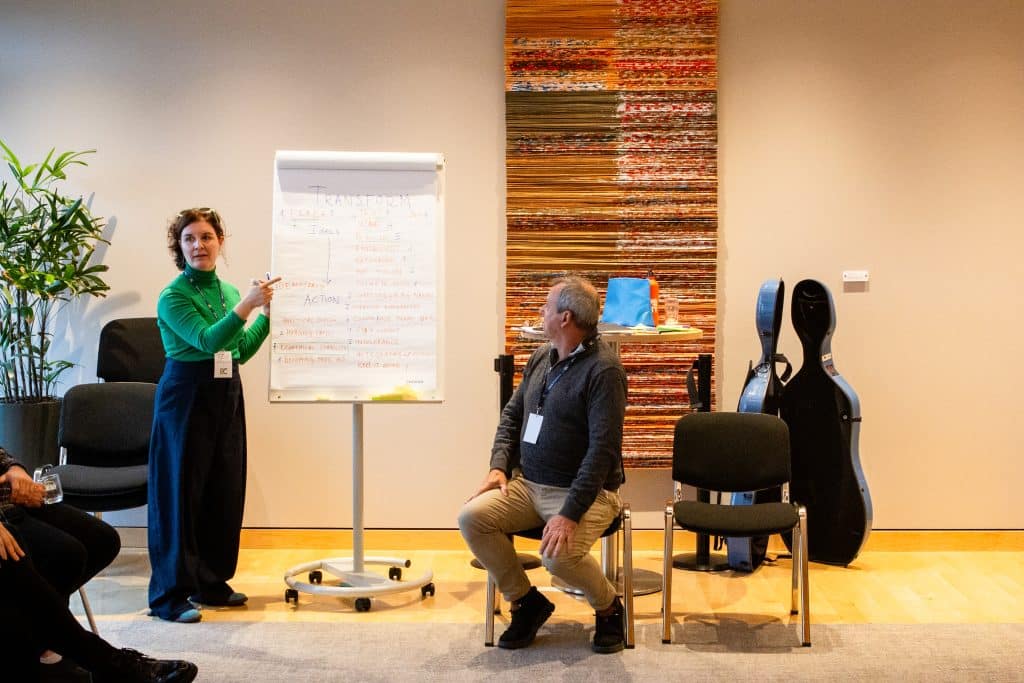
- The bid has presented its Transcultura methodology in the workshop “Becoming Europe – An Embodied Journey through Transcultura”, together with professionals and cultural agents from different European countries
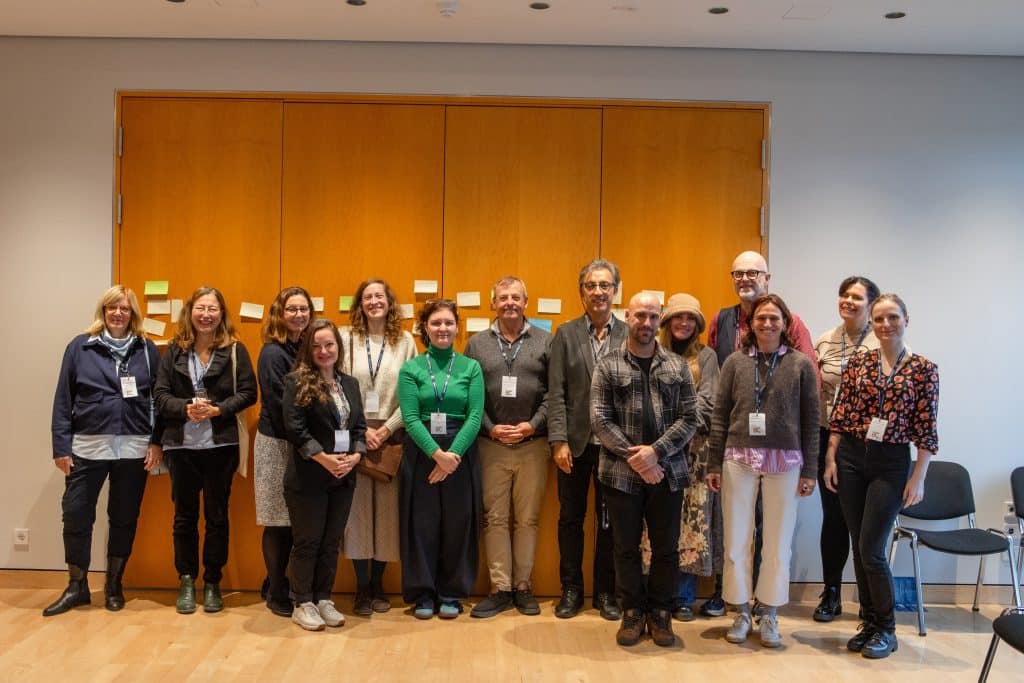
Cáceres 2031 is participating these days in Berlin in the Berlin Conference 2026: “Europe: The Art of Belonging”, promoted by A Soul for Europe, a meeting that brings together political representatives, artists, cultural leaders and civil society agents from different countries to reflect on the role of culture in the construction of the European project.
The general coordinator of Cáceres 2031, Iris Jugo, has been invited to participate in the conference program with the workshop “Becoming Europe – An Embodied Journey through Transcultura”, developed together with Simon Sharkey, director of The Necessary Space.
The session has made it possible to transfer the Transcultura methodology, the focus of Cáceres 2031, to the European context and share it with participants from different European territories. A methodology based on listening, connecting and transforming, which presents culture as a space for exchanging knowledge and experiences between people and territories.
“We have had the opportunity to work on Transcultura with people from all over Europe and show the methodology and work that we are developing in Cáceres, but also the legacy that we want to remain beyond 2031,” Jugo explained.
Cáceres, within the European cultural conversation
Under the motto “Europe: The Art of Belonging”, this year’s Berlin Conference addresses issues such as the feeling of belonging to Europe, citizen participation, creative freedom, peace and the responsibility of political institutions in the face of the cultural and social challenges of the continent.
For more than twenty years, A Soul for Europe has promoted the encounter between the world of culture and political decision-making from Berlin, defending that culture must occupy a central place in the democratic construction of Europe.
The participation of Cáceres 2031 has also allowed us to strengthen relationships with organizations and networks such as Culture Action Europe, European Festivals Association, A Soul for Europe and Stiftung Zukunft Berlin, as well as holding meetings with European parliamentarians, municipal representatives, artists and cultural professionals from different countries.
“We are infinitely grateful for this invitation because it allows us to put Cáceres and Extremadura in relation to initiatives, institutions and people who are thinking about the cultural future of Europe. We have talked about peace, conflict, creative freedom and, above all, how politics has to dialogue with culture,” said the general coordinator of Cáceres 2031.
For Jugo, the presence in Berlin also has a strategic dimension for the candidacy: “We are representing Extremadura and Cáceres 2031 in an international space that understands culture as a tool of transformation. We want to participate in this European conversation, but also contribute from our territory our own way of understanding and building it.”
From Berlin to Cáceres: a round trip
Participation in the Berlin Conference is part of the European exchange and cooperation process that Cáceres 2031 is developing during this phase of the candidacy. A process conceived not only as a way to show the project outside Extremadura, but also to incorporate debates, knowledge and experiences from other territories into Cáceres.
Thus, this path will continue through the conferences that will be held on November 9 and 10 in Cáceres, where the project will continue addressing the transformative role of culture and the need to convert European political commitments with the cultural sector into concrete measures.
“It is a round trip. We share what we are learning and building in Cáceres, but we also return with knowledge, connections and questions that help us move forward,” said Jugo.
The general coordinator also emphasized one of the recurring themes during the Berlin sessions: the need for political recognition of the role of culture to translate into practical action. “We need politics to support culture not just with words, but with concrete actions and budgets. We’re talking about supporting artists, cultural initiatives, and the community life that allows culture to truly become a transformative force,” she concluded.
The presence in Berlin thus reinforces the European dimension of Cáceres 2031 and its desire to build the candidacy through exchange with other territories, cultural networks, institutions and artists, placing Cáceres and Extremadura as active participants in the conversations that are defining the cultural future of Europe.