- The membership reinforces the involvement of the university community in the candidacy and opens new opportunities for collaboration around culture and its impact on the territory
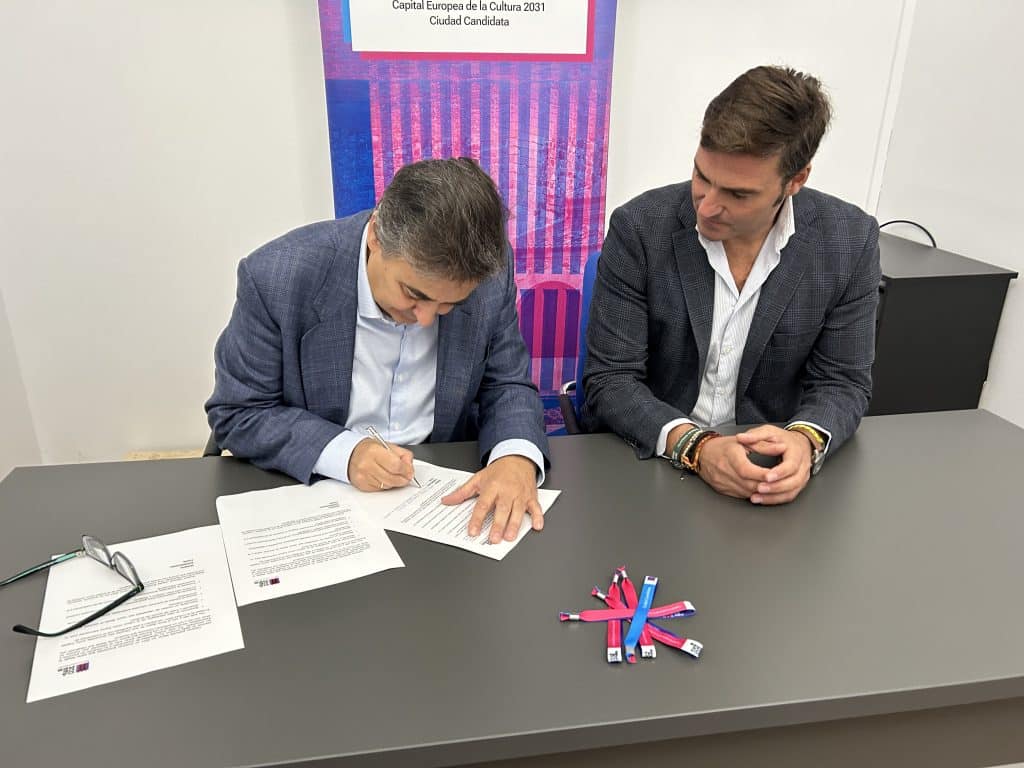
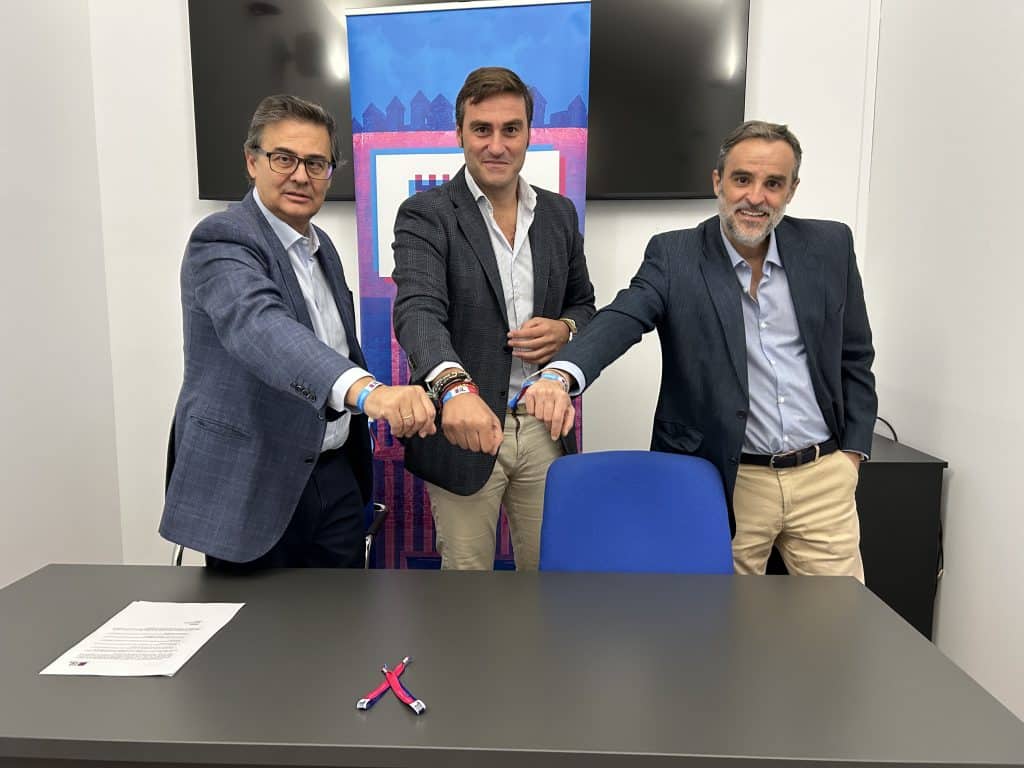
The Faculty of Business, Finance and Tourism of the University of Extremadura (UEx) has formalized its adhesion to Cáceres’ bid for European Capital of Culture 2031, thus joining the set of institutions and entities that support this city and territory project.
The signing ceremony was attended by the Councillor for Culture of the City Council of Cáceres, Jorge Suárez, and the Dean of the Faculty, José Manuel Hernández, in a meeting that highlights the importance of strengthening collaboration between the university environment and the bid.
This incorporation represents a new boost for Cáceres 2031, especially due to the Faculty’s link with business, the economy and tourism, essential to explore the opportunities that culture can generate in the development of the territory and its European projection.
Cáceres 2031 especially values the involvement of the University of Extremadura and its academic community in a project that, through the Transcultura methodology, seeks to connect knowledge, experiences and capabilities to build a candidacy open to the participation of the entire society.
A network of university support with an international reach
The accession of this Faculty adds to the support that Cáceres 2031 has already received from numerous international university institutions. Among them are the universities of Angers (France), Wroclaw (Poland), Delaware (United States), Évora (Portugal), Gävle (Sweden), Otto-von-Guericke of Magdeburg (Germany), Parma (Italy) and the Atlantic Technological University (Ireland). To this support are also added those of the School of Arts of the University of Évora and the University of Extremadura itself, consolidating a global academic network linked to the cultural project of Cáceres.
With this new membership, Cáceres 2031 continues to expand its support network and consolidate a collective candidacy in which culture is understood as an engine of transformation and future for Extremadura.