- The novel prize, one of the most prestigious awards in Spanish literature, will be awarded during the Biennial
The Vargas Llosa Chair has presented the program for the 6th Mario Vargas Llosa Novel Biennial, which will be held from October 22 to 25, with Cáceres as the main venue and extensions in Badajoz and Trujillo, supported by the Regional Government of Extremadura. This is the first edition to be held outside the American continent, a milestone that consolidates Extremadura as a cultural benchmark in the Hispanic world.
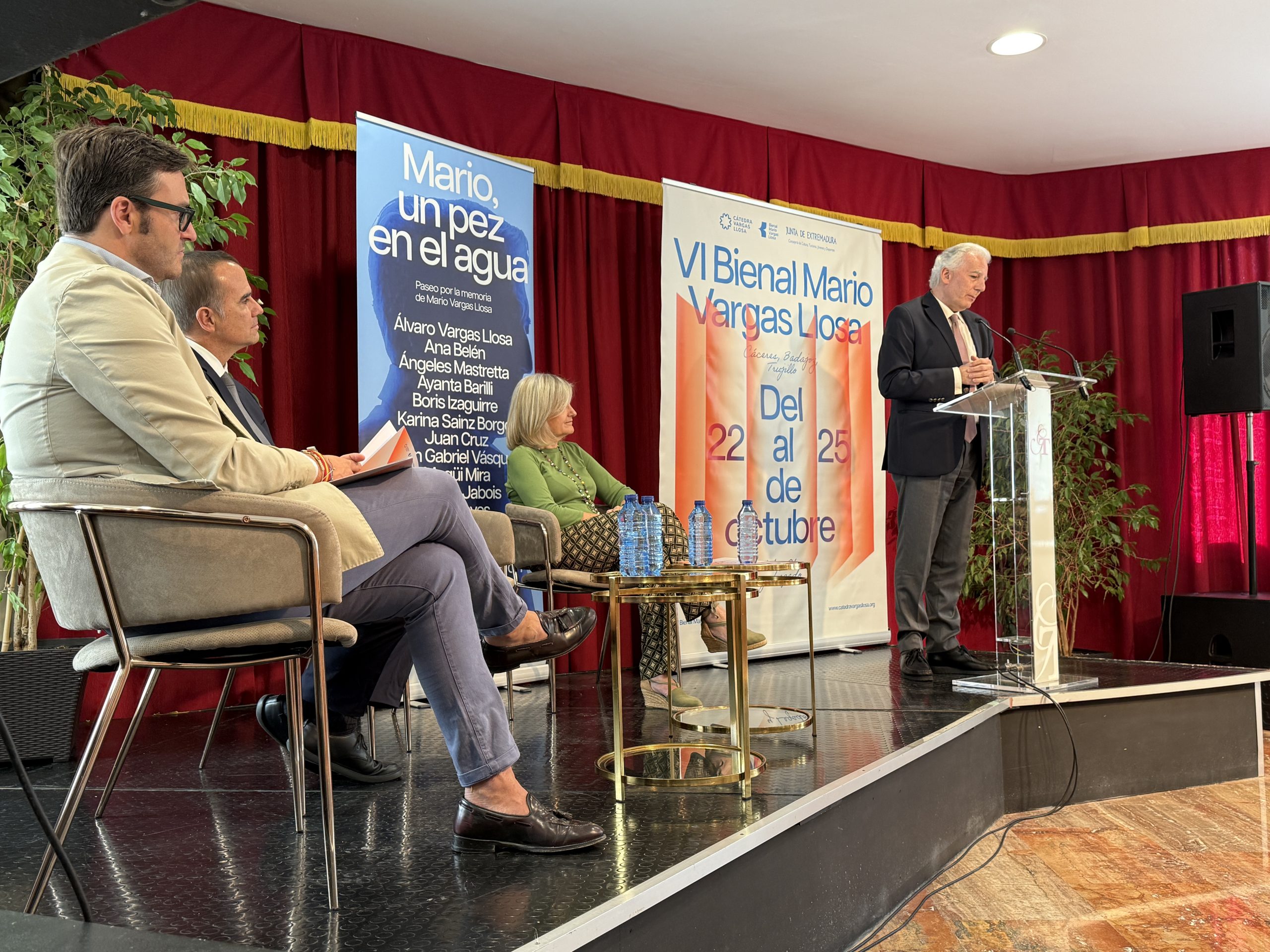
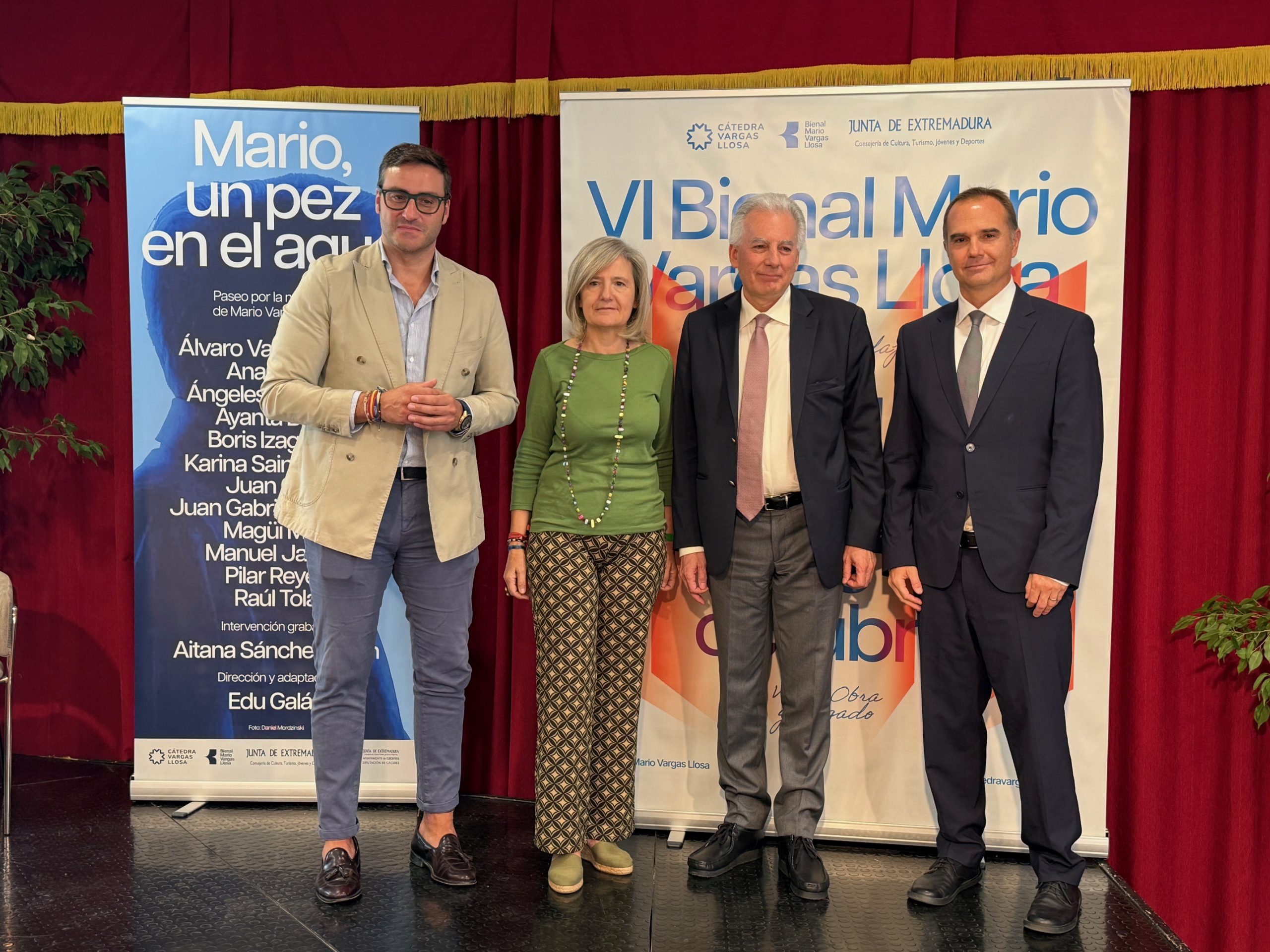
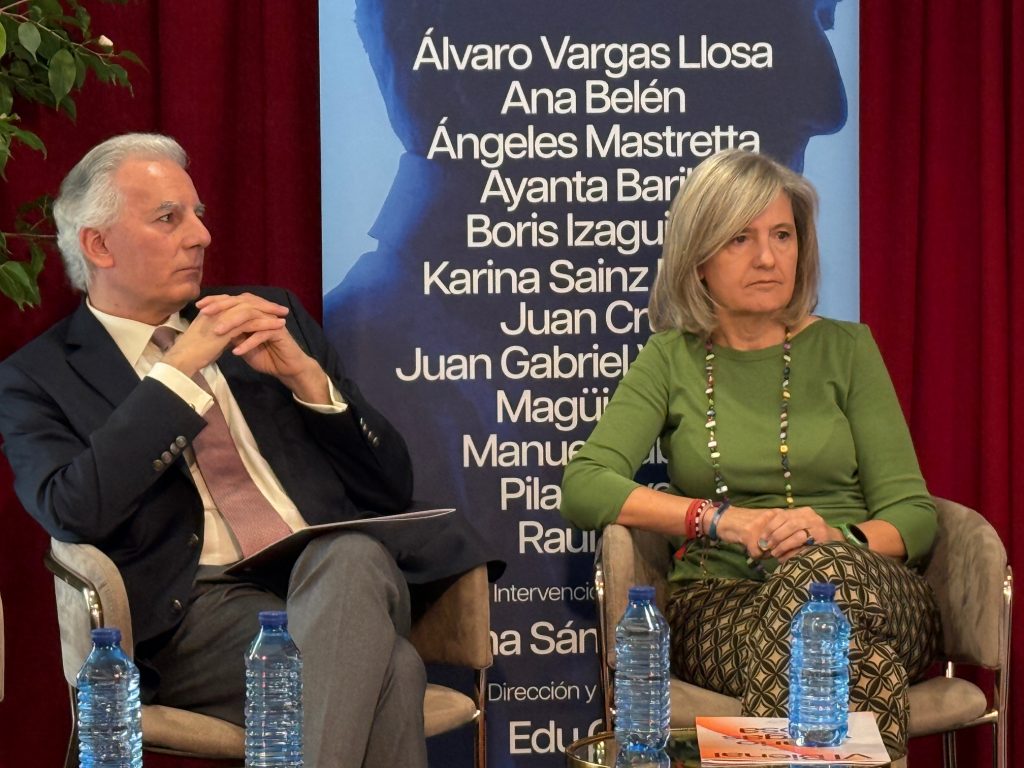
The presentation, held at the Gran Teatro de Cáceres, was attended by the Regional Minister of Culture, Tourism, Youth, and Sports, Victoria Bazaga; Álvaro Vargas Llosa, writer and son of the Peruvian Nobel Prize winner; Raúl Tola, director of the Vargas Llosa Chair; and the Councilor for Culture of the Cáceres City Council, Jorge Suárez.
During her speech, Victoria Bazaga emphasized that the Biennial “is not only a literary event, but also a cultural and economic lever.”
“Books,” she stressed, “are one of the most solid and resilient cultural industries. They generate employment, boost creativity, and project the image of our cities. Literature is also a creative economy and a driving force for tourism.”
Bazaga noted that this edition will be a posthumous tribute to Mario Vargas Llosa, “a universal figure and one of the great Spanish-language writers of the 20th century.”
She also emphasized that Cáceres is consolidating its position as the Latin American capital of the word, a meeting point that strengthens the book value chain, encourages reading, and brings contemporary literary production closer to the general public.
“The Biennial,” the councilor added, “acts as a natural bridge between Spain and Latin America, sharing language, literature, and a common cultural space. Cáceres, with its history and heritage, is today the perfect setting for this dialogue between the two sides of the Atlantic.”
Among the benefits of this Biennial for Extremadura, she highlighted the economic benefits, due to the impact on the local hospitality, restaurant, and commerce industries; the media benefits, due to its international reach, which positions the region as a cultural benchmark; and the social and educational benefits, as all activities will be open to the public, fostering connections between readers and authors. and strategic, because it consolidates Cáceres as a venue for major cultural events, thus strengthening its bid for European Capital of Culture in 2031.
For his part, Álvaro Vargas Llosa emphasized that the purpose of the Chair “was not so much to promote his figure and his work, but above all, to serve as a means of promotion and inspiration for the dissemination of culture in general and literature in particular, contributing to the knowledge and emergence of new values and generations of writers.”
Along these lines, he added that the last thing his father wanted was for Latin American literature to become a statue following the boom in Latin American writers. “Literature must be renewed; if the Chair can contribute to new generations of writers gaining visibility, relevance, and recognition, one of its objectives will have been fulfilled,” noted the son of the Peruvian Nobel Prize winner.
Furthermore, Álvaro Vargas Llosa explained Extremadura’s “long-standing” connection with Latin America and, specifically, that of his family. “The Vargas surname is of Asturian origin; they moved to Extremadura and from there they left for Peru more than half a millennium ago,” he stated.
“The Vargas surname is of Asturian origin; they moved to Extremadura and from there they left for Peru more than half a millennium ago,” he stated. He also recalled that his father performed as an actor at the Mérida International Classical Theatre Festival in the play “Odysseus and Penelope,” alongside Aitana Sánchez Gijón. “His memory was very beautiful and he shared it with his family many times throughout his life,” he explained, highlighting the “emotional and intellectual relationship” between the Vargas Llosa family and Extremadura.
PROGRAM IN CÁCERES
The Biennial program, presented by the director of the Vargas Llosa Chair, Raúl Tola, includes debates, tributes, recitals, and meetings that will take place in theaters, bookstores, libraries, and streets of the three cities.
The inauguration, titled ‘Mario, a Fish in Water’, will take place on October 22 at the Gran Teatro de Cáceres with a posthumous tribute to the Peruvian Nobel Prize winner, directed by Edu Galán and presented by Álvaro Vargas Llosa.
Participating will be figures such as Ana Belén, Ángeles Mastretta, Héctor Abad, Manuel Jabois, Magüi Mira, Ayanta Barilli, Juan Cruz, Juan Gabriel Vásquez, Raúl Tola, Pilar Reyes, Karina Sainz Borgo, and a special intervention by Aitana Sánchez-Gijón.
The Mario Vargas Llosa Biennial Novel Prize, with a prize of $100,000, will be awarded on Saturday, October 25 and will recognize the best novel published in Spanish in the last two years. The six finalists include authors such as Gustavo Faverón, Pola Oloixarac, Ignacio Martínez de Pisón, Sergio Ramírez, David Uclés, and Gioconda Belli.
The Gran Teatro de Cáceres will also host key literary dialogues, with artists such as Fernando Savater, Enrique Krauze, Juan Gabriel Vásquez, Juan Manuel de Prada, Marta Fernández, Rubén Amón, Ángeles Mastretta, and Juan Luis Cebrián.
In parallel, the Tatiana Foundation will host the professional publishing industry series, and the Helga de Alvear Visual Arts Center will celebrate performance poetry with artists such as Violeta Gil, Elsa Moreno, Ruiseñora, and Juan Carlos Panduro.
BIENNIAL EXTENSIONS: BADAJOZ AND TRUJILLO
In Badajoz, the Church of Santa Catalina will host a series on historical novels with authors such as María Reig, Jesús Sánchez Adalid, Fernando Iwasaki, and Isabel San Sebastián, and the Palacio de Congresos will host a concert by the Extremadura Orchestra, featuring works by Peruvian composer Jimmy López.
Trujillo will hold the series “The Craft of Writing” at the Palacio de los Barrantes-Cervantes, in collaboration with the Zenda platform. Writers such as Karina Sainz Borgo, José Carlos Llop, Patricia Soley, and Luis Alberto de Cuenca will also participate. There will also be children’s workshops, exhibitions, and activities related to Library Day.