- More than 1,100 plants will be distributed to reinforce urban biodiversity with the involvement of citizens.
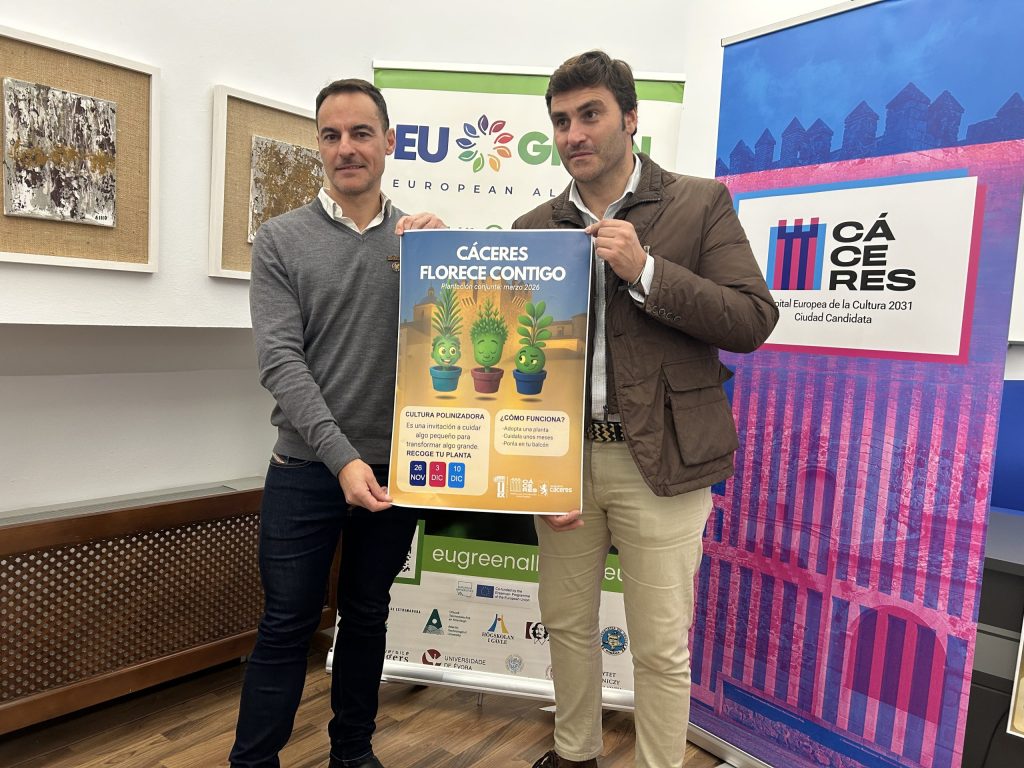
Cáceres 2031 has presented this Monday, together with the University of Extremadura (UEx), ‘POLINIZA Cáceres 2031’, an initiative aimed at promoting the return of wild pollinators and strengthening urban biodiversity through citizen participation. The project, inspired by the European Insectopía program, combines science, creativity and community action, and is one of the first visible steps towards a greener Cáceres, aligned with the values of the European Capital of Culture 2031 candidacy.
During the presentation, the Councilor for Culture, Education and Commerce of the City of Cáceres, Jorge Suárez, stressed that “‘POLINIZA Cáceres 2031’ is a simple but powerful initiative that invites citizens to be part of a collective effort to improve our environment and recover the presence of pollinators, essential for the health of our urban ecosystems”.
Suárez pointed out the social importance of the project indicating that “every plant that someone takes care of today becomes a real resource for pollinators tomorrow, and every individual gesture adds up to this common goal”. He also highlighted the work developed together with the UEx and thanked “their involvement in the project with which we unite scientific culture and citizen participation on this path towards the capital in 2031”.
More than 1100 plants throughout the city
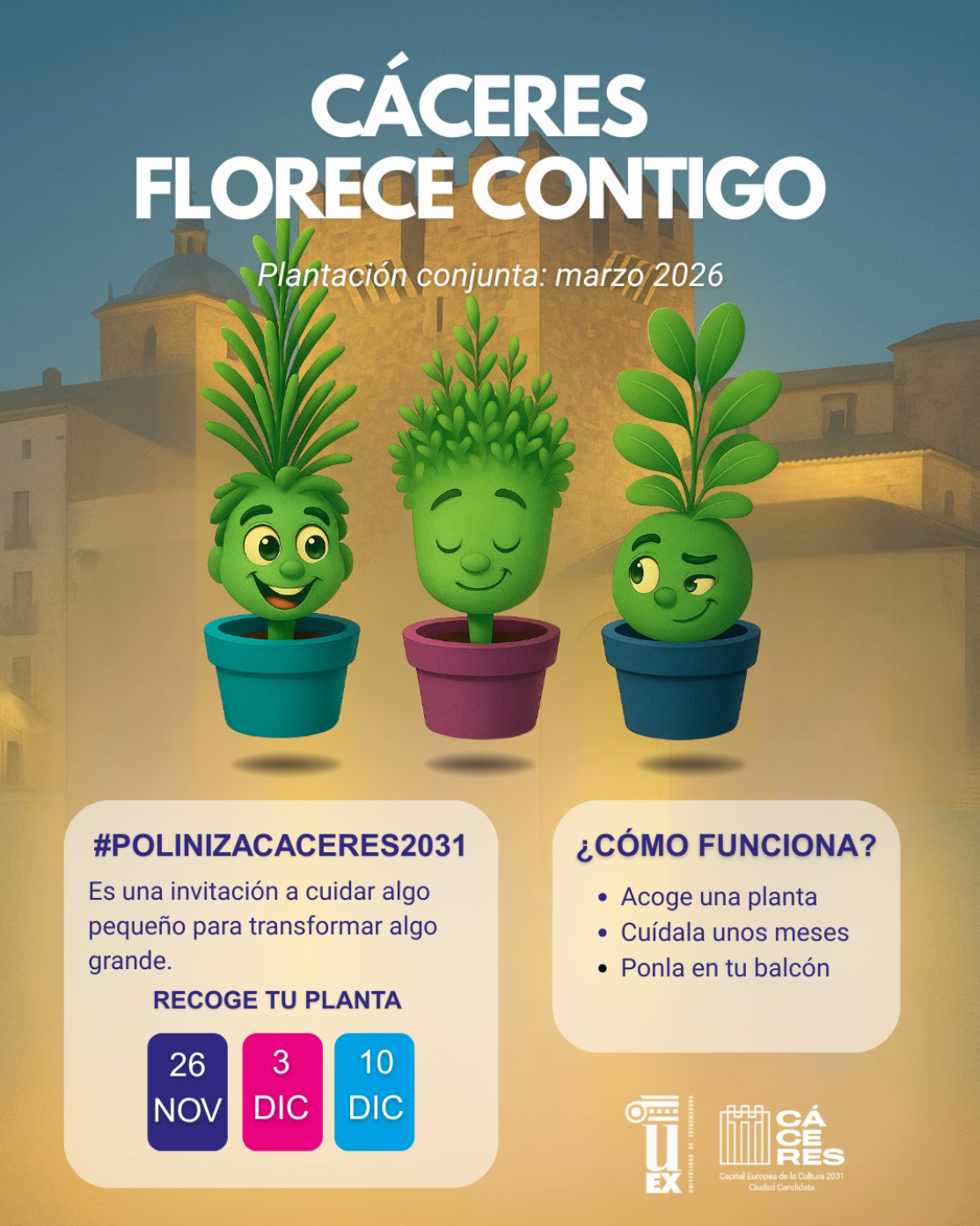
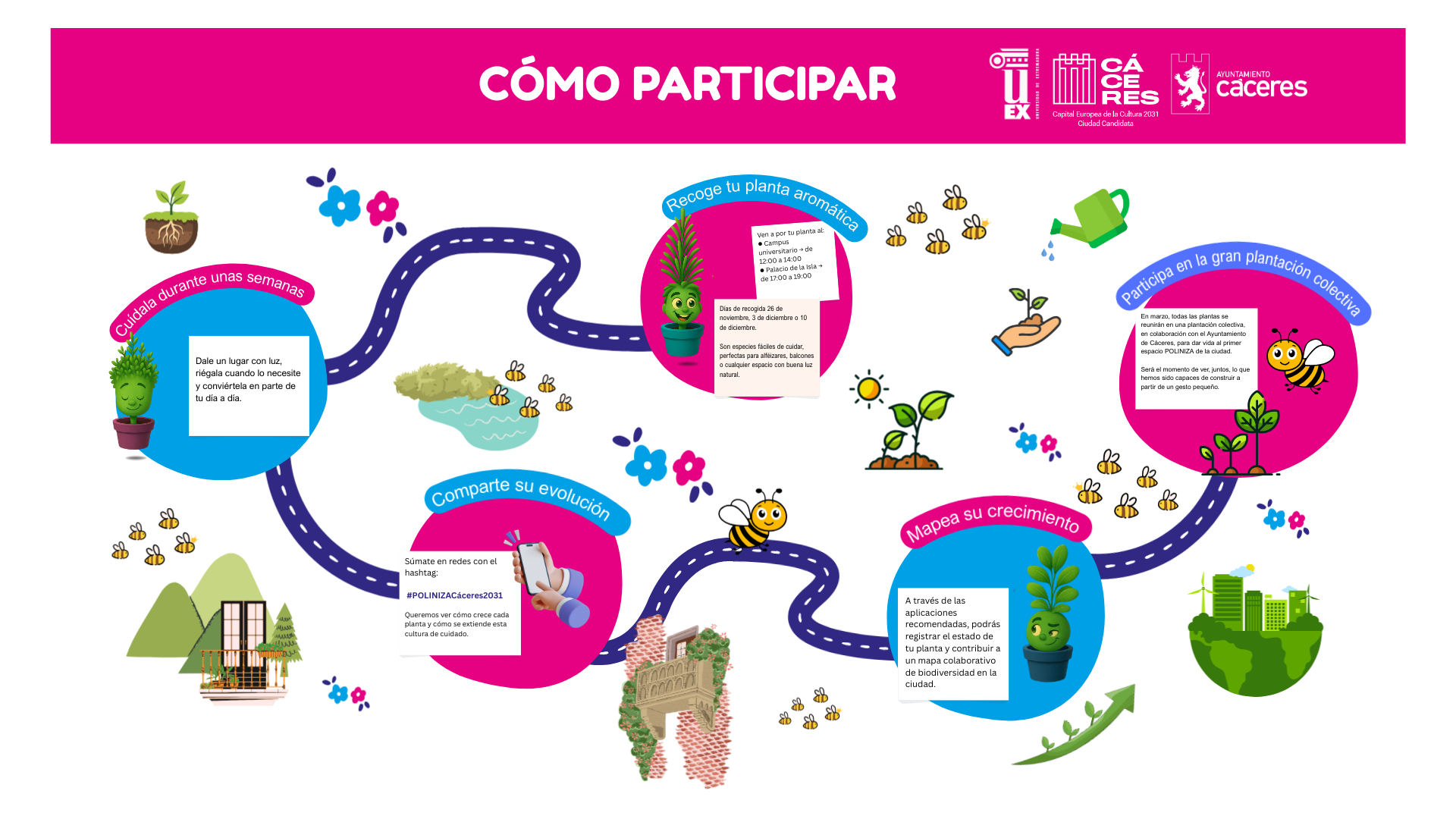
POLINIZA Cáceres 2031′ will distribute 1,146 aromatic plants – rosemary, oregano and thyme – which participants will be able to collect on three specific days. To participate, it is necessary to register in advance through the registration form https://forms.cloud.microsoft/pages/responsepage.aspx?id=i8Q5CzKSqEirxNGYcqnHe1L5xTHIH79IlR2rMaoFL5hURUQ3MkZOSTJGTlJCWVRFTkwyUFI5TU1DRy4u .
Once registered, participants will be able to pick up their plant either on November 26, December 3 or December 6, from 12:00 to 14:00 at the Campus of the UEx, and from 17:00 to 19:00 at the Palacio de la Isla. Each plant includes a sticker with a QR code that links to a personalized weekly care guide.
In addition, citizens will be able to share the evolution of their plants on social networks using the hashtag #POLINIZACáceres2031, thus joining their contributions to a collaborative map of urban biodiversity that will make it possible to visualize the collective impact of the project.
Professor Jesús Díaz Álvarez, scientific leader of the initiative and general coordinator of the European alliance ‘EU GREEN’, explained the ecological relevance of the project and explained that “pollinators are essential for the balance of urban ecosystems, and their recovery depends on continued actions that generate sufficient refuges and resources in the city”.
The initiative will culminate in March with a large collective planting, where all the plants cared for by citizens will be part of the first POLINIZA space, created jointly by the City of Cáceres, the Cáceres 2031 Consortium and the University of Extremadura.